
Appliance problems often start with simple issues such as a tripped breaker, incorrect settings, a clogged filter, or a blocked component. Before scheduling a repair, homeowners can safely perform a few basic checks, but electrical components, gas connections, sealed systems, and other hazardous parts should be left to qualified professionals.
What Should You Check Before Trying to Repair an Appliance?
Before attempting any troubleshooting, take a moment to identify exactly what is happening. A clear description of the problem can help you determine whether the issue is something simple or requires professional diagnosis.
Start with these basic checks:
- Check the power supply. Make sure the appliance is plugged in securely and that the circuit breaker has not tripped.
- Check the settings. Confirm that the correct cycle, temperature, timer, or operating mode is selected.
- Check for visible obstructions. Look for blocked vents, filters, drains, hoses, or other accessible areas.
- Check the owner’s manual. Manufacturer instructions often include troubleshooting steps specific to the model.
- Look for error codes. If the appliance displays a code, record it before resetting or turning the appliance off.
- Check for obvious signs of damage. Frayed cords, burning smells, smoke, exposed wiring, or leaking water require extra caution.
Do not remove panels or access internal components simply because an appliance is not working. Some parts can retain electrical energy even after the appliance has been unplugged.
When Is DIY Appliance Troubleshooting Safe?
DIY troubleshooting is generally most appropriate when you are checking external, user-accessible components that do not require electrical, gas, or mechanical disassembly.
For example, you may be able to clean an accessible filter, check a drain hose for a visible kink, remove debris from an approved area, verify a refrigerator setting, or make sure a dishwasher is not overloaded.
The goal is to identify simple problems without creating a new safety risk. If fixing the issue requires removing a protective cover, disconnecting wiring, working around gas, or accessing internal electrical components, stop and seek professional assistance.
When Should You Avoid DIY Appliance Repairs?
Some appliance problems should never be treated as routine do-it-yourself projects.
Avoid attempting internal repairs if you notice:
- Smoke or sparks
- A burning or melting smell
- Exposed electrical wiring
- Repeated breaker trips
- Gas odors
- Significant water leaks
- Severe overheating
- Damaged power cords
- Unusual electrical sounds
- A microwave that is malfunctioning internally
- Problems involving sealed refrigeration components
Gas appliances and microwaves require particular caution. A gas connection should not be disassembled without the appropriate qualifications, and microwave components can remain hazardous even when the appliance is unplugged.
If the problem involves these areas, professional diagnosis is safer than experimenting with internal repairs.
What Basic Checks Can You Perform on Common Appliances?
Different appliances have different failure points. Knowing what you can safely check can help you gather useful information before contacting a technician.
Refrigerator and Freezer
If a refrigerator or freezer is not cooling properly, start with the temperature setting. Make sure the appliance has power and that the doors are closing completely.
You can also check whether food or containers are blocking vents inside the appliance. Dirty or obstructed accessible components may also affect performance.
If the unit continues to run without cooling properly, makes unusual noises, develops excessive frost, or shows signs of a sealed-system problem, professional diagnosis may be necessary.
Dishwasher
A dishwasher that will not start may have a simple issue with the door, power supply, cycle selection, or control settings.
If it runs but does not clean properly, check whether the spray arms are visibly obstructed and whether dishes are blocking the water flow. The filter can also become clogged with food particles on models that include a user-accessible filter.
Standing water, repeated draining problems, unusual electrical smells, or persistent leaks are reasons to stop troubleshooting and arrange professional service.
Washing Machine
If a washer does not start, first check its power supply and make sure the door or lid is properly closed.
For draining problems, inspect the accessible drain hose for obvious kinks or blockages. An overloaded machine can also cause balance and spinning problems.
If the washer repeatedly stops, leaks from an unknown source, makes loud mechanical noises, or fails to drain after basic checks, a technician may need to inspect the internal components.
Dryer
When a dryer is not heating, check the cycle settings and make sure the appliance has power. For gas dryers, do not attempt to inspect or disconnect the gas system yourself.
A blocked or restricted dryer vent can also affect performance and increase safety concerns. The vent system should be kept clear and maintained appropriately.
If the dryer produces a burning smell, overheats, repeatedly shuts down, or continues to have heating problems after basic checks, professional service is recommended.
Oven and Stove
For an oven that does not heat, verify the selected temperature and cooking mode. If the appliance has an accessible display or control panel, check for error messages.
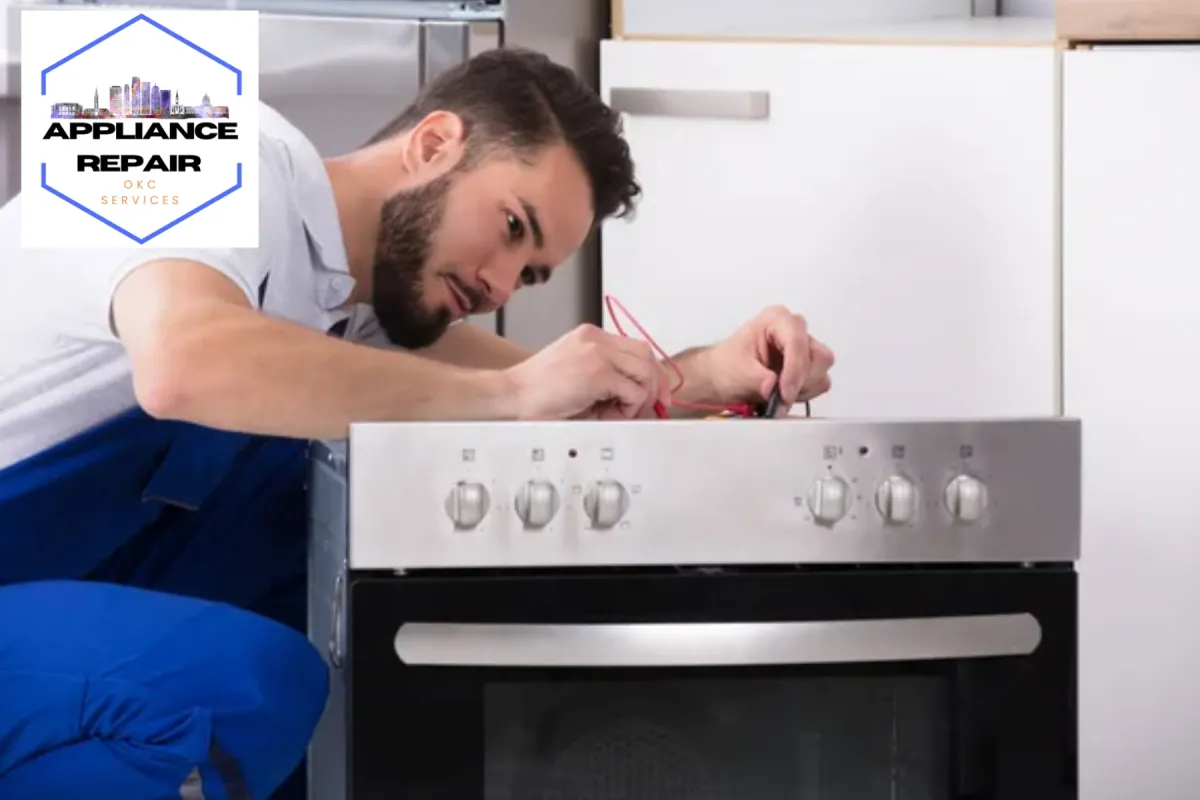
Do not attempt to disassemble an oven or stove to inspect electrical or gas components unless you are properly qualified to do so.
If you smell gas, stop using the appliance and follow appropriate gas-safety procedures. Do not try to locate or repair a gas leak yourself.
Garbage Disposal
A garbage disposal that does not run may have a power issue, switch problem, or jam. Check whether the appliance has power and follow the manufacturer’s instructions for any built-in reset procedure.
Never place your hands inside the disposal to search for an obstruction. If an object is stuck and cannot be safely removed using the manufacturer’s recommended procedure, contact a professional.
What Does Your Appliance Symptom Tell You?
The symptom itself can provide useful information about what may be happening.
| Symptom | Possible Area to Check |
|---|---|
| Appliance will not turn on | Power, breaker, controls, door or lid |
| Appliance runs but does not perform properly | Settings, filters, airflow, water supply, loading |
| Appliance makes unusual noises | Obstruction, moving components, motor-related issue |
| Appliance leaks water | Hose, drain, seal, connection, internal component |
| Appliance overheats | Ventilation, airflow, component malfunction |
| Error code appears | Owner’s manual or manufacturer troubleshooting information |
| Breaker repeatedly trips | Electrical fault requiring professional diagnosis |
| Gas odor is present | Stop using appliance and seek qualified assistance |
These symptoms are not a diagnosis. Several different problems can produce similar signs, so avoid replacing parts based only on a symptom.
How Can You Tell When a Problem Needs Professional Diagnosis?
A professional inspection becomes increasingly important when basic external checks do not resolve the issue.
For example, if you have already verified the power supply, settings, accessible filters, and other manufacturer-recommended checks but the appliance still does not operate correctly, replacing random parts may waste money without fixing the underlying problem.
A qualified technician can test the appliance systematically and determine whether the problem involves a control board, motor, heating element, valve, thermostat, wiring, compressor, pump, or another component.
This is especially important when the appliance has an electrical, gas, refrigeration, or internal mechanical problem.
For homeowners looking for appliance repair in Oklahoma City, OK, the same principle applies: basic troubleshooting can help identify simple issues, but professional diagnosis is appropriate when the problem goes beyond safe user-level checks.
What Should You Check About Your Warranty Before Repairing an Appliance?
Before attempting repairs, check whether the appliance is still covered by a manufacturer’s warranty, extended warranty, service contract, or another protection plan.
Some warranties have specific requirements regarding who performs repairs. Attempting unauthorized repairs could affect coverage, depending on the terms of the agreement.
Check your documentation for:
- Warranty duration
- Covered components
- Authorized service requirements
- Service fees or deductibles
- Parts and labor coverage
- Exclusions
- Proof-of-purchase requirements
If the appliance is under warranty, contacting the appropriate provider before performing repairs can help you avoid unnecessary costs or complications.
How Do You Choose an Appliance Repair Company?
When basic troubleshooting does not solve the problem, choosing the right repair company becomes the next step.
Look for a company that clearly explains its services, works with the type and brand of appliance you own, and provides straightforward information about scheduling and pricing.
A reliable repair provider should be willing to explain what the technician will inspect and what happens after the problem is identified.
For homeowners searching for Oklahoma City appliance repair, local service availability can also be an important consideration. A nearby provider may offer more convenient scheduling and a better understanding of the appliances commonly used in the area.
Do not choose a company based solely on the lowest advertised price. Consider service transparency, experience, warranty information, communication, and whether the company can properly diagnose your appliance.
What Questions Should You Ask Before Scheduling Repair?
Before agreeing to a repair appointment, ask a few practical questions.
- Do you service my appliance brand and model?
- Is there a diagnostic or service-call fee?
- Will I receive an estimate before repair work begins?
- What warranty is provided on parts or labor?
- How soon can a technician inspect the appliance?
- Will the technician diagnose the problem before recommending a replacement?
- Are your technicians qualified to work on this type of appliance?
Asking these questions upfront can help you understand the service process and avoid unexpected costs.
Should You Repair or Replace the Appliance?
Not every malfunction means an appliance needs to be replaced. A repair may be practical when the appliance is otherwise in good condition and the failed component can be safely replaced.
Replacement may become worth considering when an appliance has repeated failures, extensive damage, or a repair cost that is disproportionate to the appliance’s remaining useful life.
A technician can help identify the actual problem and explain the available repair options. You can then compare the repair cost, appliance age, condition, and expected future use before making a decision.
For homeowners searching for appliance repair in Oklahoma City, getting a professional diagnosis before purchasing a replacement can prevent an otherwise usable appliance from being discarded unnecessarily.
What Can You Do to Prevent Appliance Problems?
Basic maintenance can help appliances operate more reliably.
Follow the manufacturer’s recommended maintenance schedule and avoid practices that place unnecessary strain on the appliance.
Useful habits include:
- Cleaning accessible filters regularly
- Keeping refrigerator and freezer vents unobstructed
- Avoiding overloading washers and dishwashers
- Cleaning lint from the dryer after each load
- Keeping dryer ventilation properly maintained
- Checking accessible hoses for visible wear
- Following recommended loading instructions
- Using the correct settings and detergents
- Addressing unusual sounds or performance changes early
- Scheduling professional inspection when recurring problems appear
Preventive maintenance does not eliminate every failure, but it can help identify developing problems before they become more disruptive.
Frequently Asked Questions
Can I troubleshoot an appliance before calling a technician?
Yes. You can safely check basic items such as power, settings, accessible filters, visible obstructions, hoses, and error codes. Avoid opening panels or working on electrical, gas, refrigeration, or other hazardous components.
Should I repair an appliance myself if it is out of warranty?
Being out of warranty does not automatically mean an appliance is safe to repair yourself. Only perform simple user-level checks that do not involve hazardous components or internal disassembly.
What appliance problems require a professional?
Problems involving gas, exposed wiring, repeated breaker trips, smoke, burning odors, major leaks, internal electrical components, sealed refrigeration systems, or persistent mechanical failures should be evaluated by a qualified professional.
Why should I check the owner’s manual?
The owner’s manual can provide model-specific troubleshooting instructions, error-code information, maintenance requirements, and safety warnings. It is usually a better starting point than applying generic repair advice.
Should I replace an appliance instead of repairing it?
Not necessarily. The decision depends on the appliance’s age, condition, repair cost, failure type, and expected future reliability. A professional diagnosis can clarify what repair is actually needed before you decide.
Conclusion
Basic troubleshooting can help homeowners identify simple appliance problems and gather useful information before scheduling service. The key is knowing where safe troubleshooting ends and professional repair begins.
When an appliance involves electrical, gas, refrigeration, or complex internal components, avoid taking unnecessary risks. Appliance Repair OKC Services can properly diagnose the underlying problem and help you decide whether repair or replacement makes the most sense.
Need Professional Appliance Help?
If basic troubleshooting does not resolve the problem, contact us today for professional appliance diagnosis and repair. A qualified technician can evaluate the appliance, identify the underlying issue, and explain the appropriate repair options.
LEARN MORE HERE:
How to Choose an Appliance Repair Company in Oklahoma City
The greatest Oklahoma City Appliance Repair Service. Great prices and quality.